
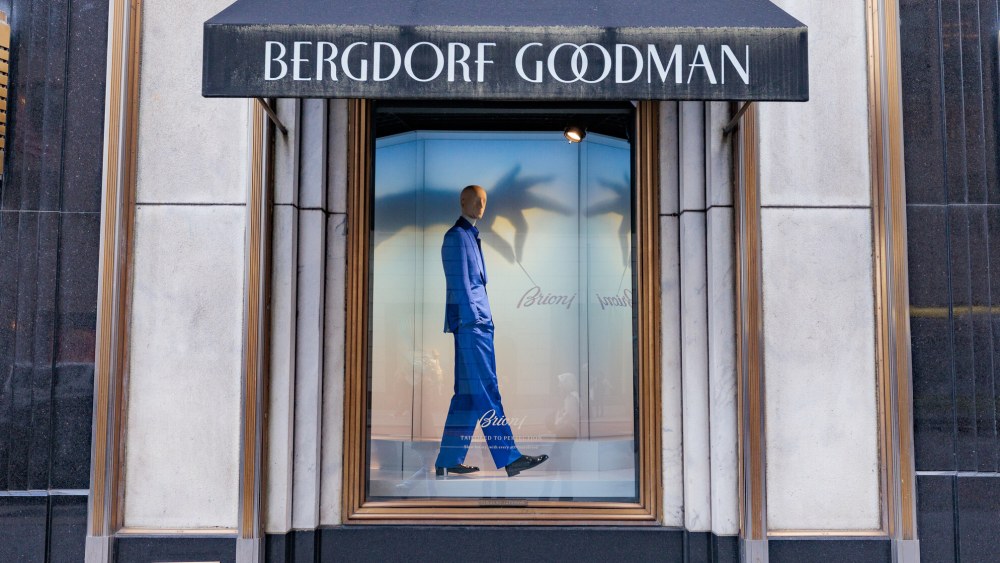
Saks Global is preparing to exit bankruptcy as soon as next week, but its journey through the Chapter 11 process is still being sketched out in voluminous court filings — 2,507 filings to date.
Among the latest batch is a rundown on the retailer’s operations for the fiscal month ended May 2.
The company — parent to Saks Fifth Avenue, Neiman Marcus and Bergdorf Goodman — logged revenues of $422.6 million for the month, producing net profits of $64 million.
Related Articles
There’s no easy comparison for those numbers as Saks Global didn’t report monthly results a year ago. Anyway, at the time it was in the middle of a scramble to build a business model that could carry debt tied to the $2.7 billion acquisition of Neiman Marcus Group as well as its own past-due bills.
You May Also Like
But a tally of results given in the monthly operating reports going back to just after the Jan. 13 bankruptcy filing shows a business that in aggregate lost money during the first three-and-a-half months of bankruptcy, but also had to shoulder heavy reorganization costs.
From Jan. 14 through May 2, Saks’ sales totaled $1.6 billion.
After selling, general and administrative expenses of $706.8 million, reorganization charges of $470.3 million and myriad other costs and expenses, it was left with a net loss of $63 million.
That suggests the business, which has already shown significant improvement as vendors resumed shipping goods, will be on a much firmer footing once the reorganization is finally completed.
Saks Global this year has also morphed into a much different business.
More than half the Saks Fifth Avenue stores are being closed, as are the majority of the Saks Off 5th locations, which will now be used primarily to clear inventory. An e-commerce deal with Amazon, which helped the company buy Neiman’s, was axed.
And the retailer is now also led by chief executive officer Geoffroy van Raemdonck, who ran Neiman’s before the deal with Saks Global.
“We are encouraged by the continued progress of our optimization efforts, which demonstrate the positive impact of our strategic actions and cost saving measures,” van Raemdonck told WWD in a statement. “Our results continue to outperform our internal plans in numerous areas including revenue, inventory and liquidity. Profitability and performance continues to sequentially improve month-to-month as we have accessed more inventory. This momentum sets us up to emerge a stronger, more focused company in the coming weeks, well-positioned to drive profitability and reimagine the future of luxury retail.”
The retailer has been working along a number of fronts to remake the business, but acknowledged that it will “it will take time for our progress to fully materialize in our financial results.”
In addition to closing stores, Saks Global has used the bankruptcy process to:
- Focus on the business’ retail core.
- Strengthen brand relationships, with $2 billion in retail receipts received since the filing and inventory in April up 15 percent compared with a year earlier.
- Zero in on luxury and full-price selling.
- Streamline the supply chain.
- Trim the corporate team.
When Saks Global does emerge from bankruptcy, it will unlock $500 million in exit financing and a new asset-backed lending agreement that will give it resources to continue its evolution.