Fresh off its cruise show in Los Angeles, the house of Dior has plenty of reasons to celebrate its historic relationship with the U.S. From the moment Christian Dior launched his label in 1947, American press and buyers were key to its success.
It was Harper’s Bazaar editor in chief Carmel Snow who christened the designer’s debut collection the New Look. Months later, Dior embarked on a tour of the U.S. on his way to collect the Neiman Marcus Award for Distinguished Service in the Field of Fashion.
Related Articles
“The press played a very important role,” said Perrine Scherrer, director of the Dior Heritage archive. “The positive coverage of the first show had a ripple effect, with American buyers rushing to get their hands on Dior looks.”
You May Also Like
Crowds turned out for his personal appearances, with WWD’s correspondent in Houston reporting that “he was saluted as elaborately as visiting royalty.”
Not everyone was thrilled with Dior’s introduction of full skirts that required yards of fabric, in stark contrast to the practical styles that prevailed during World War II, when fabric rationing forced hemlines to rise. In Chicago, Dior was picketed by members of the Little Below the Knee Club wielding signs that read: “Mr. Dior We Abhor Dresses to the Floor.”
But the couturier was unfazed. “He understood very quickly that even a negative review on the front page could be better for business than a positive review buried inside,” Scherrer said.

In 1948, Dior opened a U.S. subsidiary and promoted the launch of the Christian Dior-New York collection by posing with models for magazine spreads. “This was something he never did in Paris,” Scherrer noted.
The line, presented twice a year, was distinct from his haute couture collections shown on Avenue Montaigne. Consisting of 140 looks on average, it was designed and manufactured in the U.S. to suit the needs and tastes of American women, spanning coats, suits, daytime dresses and ensembles, afternoon, dinner and formal evening gowns.
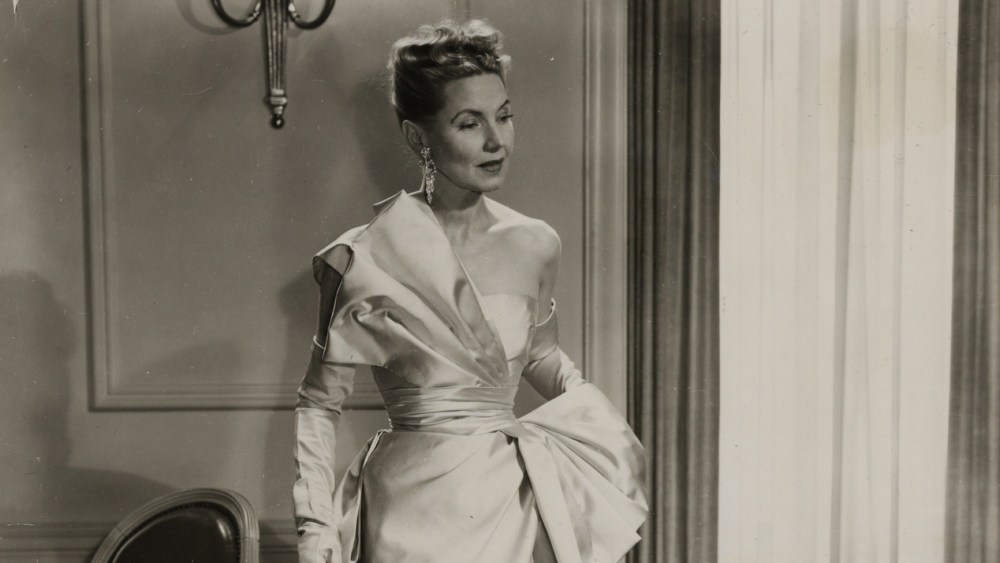
Distributed by leading department stores and specialty boutiques, the collection resonated with U.S. consumers because it didn’t skimp on sophisticated details. Take the Athena dress from fall 1951: made of gold satin, it featured a dramatic asymmetric bow over one hip.
In a 1953 feature, WWD praised Dior for maintaining strict control over its licensing operations.
“Too many Paris designers, up to now, have felt that the mere franchising of the name, the right to make merchandise designed by them but not controlled by them, is sufficient to assure wide acceptance. The Dior organization is not one to turn a ‘fast buck’ this way,” it said.
Dior established its first U.S. boutique in 1971 at Saks Fifth Avenue, and celebrated its 50th anniversary with a retrospective at the Metropolitan Museum of Art. Coming on the heels of flagship openings in New York City and Beverly Hills, creative director Jonathan Anderson’s cruise show at the Los Angeles County Museum of Art was just the latest sign of an enduring friendship.