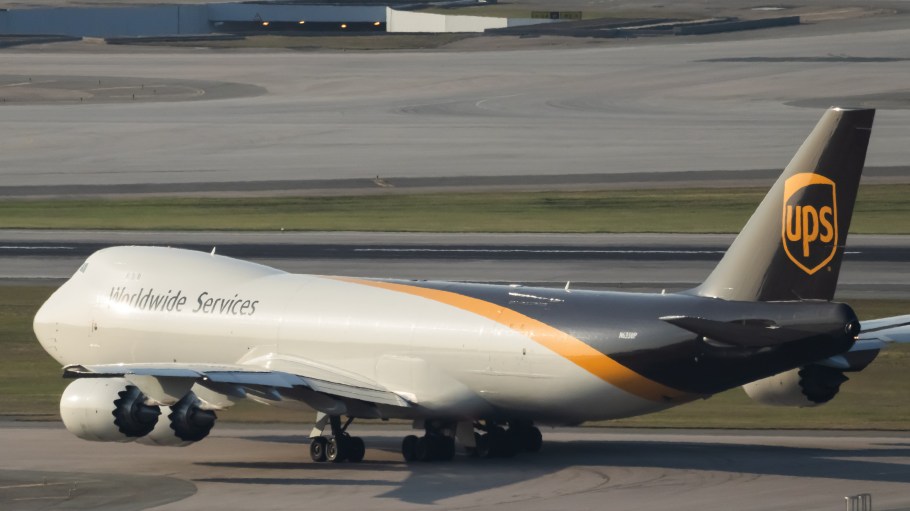
UPS is expanding its air cargo capabilities in Mexico, introducing time-definite heavy air freight service designed to help manufacturers fly shipments in and out of the country.
According to the logistics giant, the company has invested nearly $50 million in its Mexican air freight network to help bolster support for production-critical supply chains in North America for industrial and automotive manufacturers.
Matt Guffey, UPS chief commercial and strategy officer, said customers in those manufacturing fields “want an easy button for logistics.”
Related Stories
“They need reliability, visibility and a partner that understands their supply chains—end to end, today and tomorrow,” Guffey said in a statement. “We have made strategic investments to build the team and the network that meets their needs unlike any other in the industry.”
Beginning in August, UPS will offer one-, two- and three-day service options to and from Mexico to help manufacturers move high-value, time-sensitive parts with greater speed and predictability.
UPS says the project will result in fewer delays at the U.S.-Mexico border, improved visibility from origin to destination and more consistent production lines.
The Atlanta-based delivery courier is capitalizing on a massive acceleration of air freight movement between the U.S. and Mexico, while simultaneously building infrastructure around the same North American nearshoring trends that many apparel brands are exploring as they seek shorter lead times and more flexible replenishment strategies.
Air represented $33.2 billion of freight moved between the U.S. and Mexico in 2025, up 54 percent from the $21.5 billion transported via that mode in 2024. In the year’s span, the mode’s representation of total freight transported between the countries escalated from 2.6 percent of all goods moved to 3.8 percent.
Such a strong year-over-year jump likely derived from the imposition of high tariffs worldwide beginning in April last year, as well as the scrapping of the duty-free de minimis provision, forcing U.S. companies to rethink supply chains out of China and Southeast Asia.
But with qualifying apparel imports from Mexico generally entering the U.S. duty-free under the U.S.-Mexico-Canada Agreement (USMCA), nearshoring has become even more of a consideration among supply chain stakeholders.
According to the Kase Peak Season Retailer Sentiment report, an independent survey of 328 retail, e-commerce and fulfillment leaders, 94 percent of respondents believe nearshoring and domestic sourcing are important for reducing risk during the peak holiday season.
Although the company hasn’t publicly discussed its nearshoring ambitions in nearly a year, UPS CEO Carol Tomé said in a July 2025 earnings call that the company had conducted more than 600 supply chain mapping assessments to help customers evaluate reshoring options.
UPS touts that its air freight capabilities would benefit customers compared to other fragmented, multi-carrier models since the company integrates transportation, brokerage and warehousing into a single solution, effectively reducing handoffs and simplifying cross-border shipping.
The carrier feels it has an advantage among its peers due to recent supply chain modernization efforts designed to improve reliability, visibility and speed.
Those initiatives include on-demand, after-hours delivery via Roadie; less-than-truckload (LTL) offerings that allow shippers to move heavier loads through its ground network at competitive rates; enhanced visibility and control through warehouse automation across 67.5 percent of UPS facilities and RFID-sensing technology embedded throughout the company’s network.
“When we know what to expect from shipping, it helps us plan with confidence,” said David MacNeil, CEO of WeatherTech, when discussing his company’s experience working with UPS to ship accessories. “That clarity allows us to stay focused on delivering a great experience for our customers.”
Complementing its end-to-end supply chain network, UPS has established a dedicated team of more than 300 subject matter experts with industrial and automotive manufacturing expertise to help companies
UPS had sought to expand in Mexico two years ago with the acquisition of logistics and shipping company Estafeta in July 2024, but the company reneged on the deal more than a year later due to a longer-than-expected regulatory process to close the agreement. At the time, the company insisted it had still committed to growth in the Mexican market.
When the buyout was first announced, Estafeta had a network of 145 facilities that covered 95 percent of the Mexican population, with services that included parcel delivery, freight forwarding, distribution, LTL and truckload services.
The company’s air freight operation consists of six Boeing 737 air freighters in service that would have given UPS a direct connection between Mexico’s San Luis Potosí Airport and Miami.
Estafeta remains a delivery partner of UPS, with the companies collaborating since 2020.