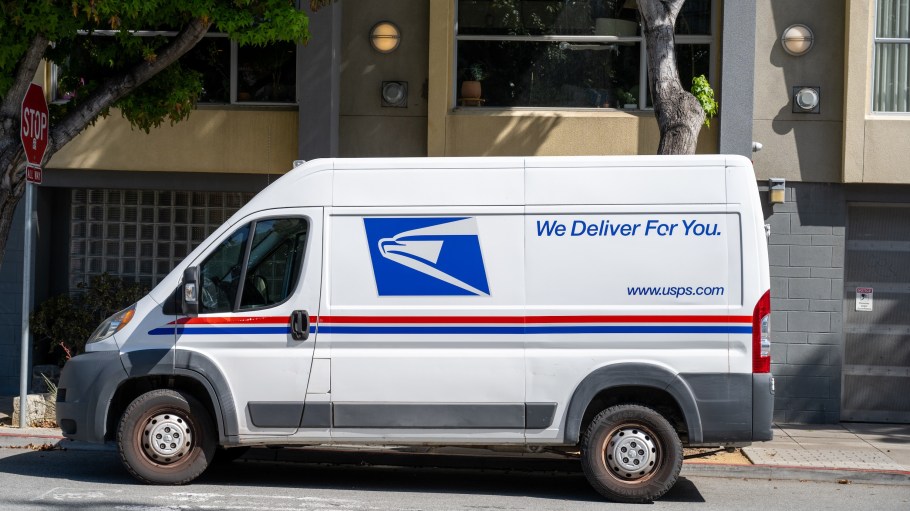
The United States Postal Service (USPS) is expanding its partnership with DHL’s parcel delivery division with a new multi-year deal that is expected to generate more than $10 billion.
With the agreement, USPS will handle more last-mile deliveries for DHL eCommerce, which aims to expand its footprint in the U.S. The German logistics giant also seeks to attract larger clients and facilitate more international volumes into the USPS network. The parties have not disclosed the length of the deal.
Related Stories
“Today’s announcement is not just about one contract,” Postmaster General David Steiner said in a media briefing Thursday. “It’s an example of the kind of Postal Service we’re building: More collaborative, more capable, and better positioned for long-term success.”
Under the exclusive partnership, all of DHL eCommerce’s last-mile domestic parcels will be delivered through USPS. DHL eCommerce handles nationwide pickup and sortation across its 19 fully automated hubs, and leverages the Postal Service’s final-mile network, which reaches more than 41,550 ZIP Codes and more than 170 million delivery points six days a week.
Scott Ashbaugh, CEO of DHL eCommerce Americas, said the partnership is attractive to customers due to addition of new service options on top of the main USPS offerings, which include Priority Mail and Ground Advantage.
“There’s a pretty big gap between those two, and so if you need something that’s in the middle in terms of price and speed, we fill in that gap with both our range-definite two-to-five day Expedited product and our two-to-three day Expedited Max product,” Ashbaugh told Sourcing Journal. “We do everything possible to make it as economical as we can.”
DHL eCommerce has traditionally been focused on transporting high volumes of smaller packages between four and eight ounces. But Ashbaugh said the new agreement has enabled the unit to shift to the one-pound-and-over space, thus allowing them to charge more competitive rates.
“We’re getting more confident in our ability to ship heavier and bigger packages than we had in the past…anywhere between two and eight pounds, or really even up to 10, where we can be much more aggressive,” Ashbaugh said. “That often plays in the sphere of some of these bigger brands. Rather than winning a lot of medium-sized accounts, we’re going to start seeing bigger brands move into our network, because we’re finding all the pain points they have currently and addressing them one by one.”
On the USPS side, the beleaguered carrier sees the expanded partnership as a win as it seeks a turnaround.
After years of hemorrhaging cash, the USPS has sought to prioritize revenue growth under Steiner. Late last year, the national courier sought to draw more volume into its last-mile delivery network by opening a bidding process for retailers, brands and logistics providers that would give them access to its 18,000 “delivery destination units.” These DDUs are the last stop before mail gets delivered to homes and businesses.
The postal service recently reupped a deal with its top customer, Amazon, but that partnership is dialing down the volume USPS will deliver for the e-commerce giant. And after a brief breakup last January, USPS also entered a new agreement with UPS last October that resulted in the agency delivering 977,000 parcels for the Atlanta-based logistics giant’s low-cost Ground Saver service in the first quarter. UPS expects to expand that number to 1.5 million daily packages by the second quarter.
DHL, Amazon and UPS represent the Postal Service’s three largest customers for last-mile delivery, with Steiner noting in the briefing that the firms reel in more than $8 billion in revenue each year for the courier.
USPS says it will run out of cash by early 2027, with Steiner stressing that the agency needs Congress to lift its statutory borrowing limit that has been in place since 1992 from $15 billion to $34.5 billion. On Tuesday, Steiner placed a freeze on nonessential spending at the Postal Service, impacting areas including hiring and travel.
While the entities have partnered for 25 years, they have typically worked together on a year-by-year basis. But after the USPS leadership turned over to Steiner, DHL decided to shift its own approach to instead work out a multi-year contract.
Ashbaugh described the new USPS brass as “much more forward-thinking than they had been in many years past, and maybe a little bit more like business success-minded.”
The CEO stressed that DHL eCommerce had the opportunity to build a wider physical ground footprint in the U.S., acquire another last-mile logistics provider or partner with an alternative carrier.
But after weighing its options, Ashbaugh said the USPS model was the best fit for the unit going ahead.