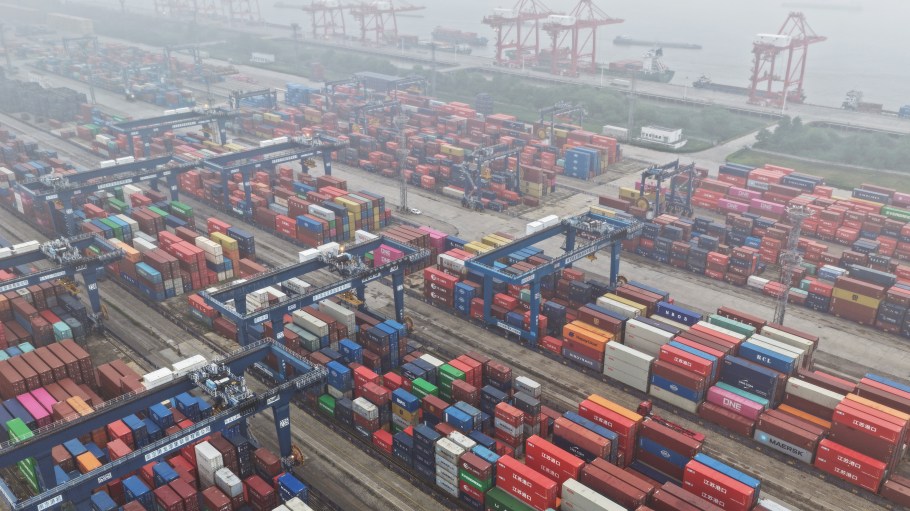
Container demand out of China and Southeast Asia is clogging up cargo capacity on the trans-Pacific corridor, potentially pulling the 2026 peak shipping season forward from its usual August start.
In a customer advisory, Seko Logistics indicated that the conditions could persist for at least the next four to six weeks, recommending shippers to secure space well in advance of their target departure time.
The war in Iran and the near shutdown of traffic through the Strait of Hormuz created a more challenging trans-Pacific ocean freight contract season as carriers sought to better adjust to changing fuel prices.
Related Stories
Amid the volatility driven by the Middle East conflict, the escalating costs have forced carriers to extend negotiations through the traditional May 1 deadline to finalize deals, according to Clint Dvorak, Seko’s vice president of global ocean product.
“Contract consummation was delayed, and now all of a sudden, there’s a pretty significant spike in demand and bookings, so it’s a little bit of a perfect storm,” Dvorak told Sourcing Journal. “I wouldn’t say that it was necessarily forecast.”
Carriers are largely booked through the end of June, with pent-up demand also stemming from China’s Golden Week holiday in the first week of May, Dvorak said.
As they mull how to recoup the volatile fuel prices, ocean carriers have begun shifting their contract terms from a quarterly fuel adjustment index to a monthly cadence. Carriers apply these mechanisms, often called bunker adjustment factors, to pass floating fuel costs onto customers without changing their base rates.
“On the trans-Pacific eastbound, the majority of the long-term agreements have now transitioned to monthly,” said Dvorak. “Historically for the trans-Pacific, it’s based on quarterly fuel, which is backward-looking when you’re setting the next quarter’s fuel. The problem is, when oil doubles, looking backward is not very helpful to the ocean carriers.”
The fuel prices have been costly for container lines and shippers alike. Maersk said earlier in May that it expects to pass on an extra $500 million in costs per month because of the increased prices.
The increase in fuel prices already has led European shippers to pull forward their imports goods from Asia ahead of anticipated June 1 bunker adjustments, Dvorak noted. Data from container tracking company Vizion supports this, with China-to-Mediterranean cargo increasing 48 percent in the two weeks prior to May 20, while cargo moving from China to Northern Europe escalated 37 percent.
Cargo traveling eastward over the Pacific Ocean appears to be following suit.
According to data from ocean and air freight benchmarking platform Xeneta, offered capacity on the Far East to U.S. West Coast declined 1.8 percent from the week prior as of Monday. Another industry benchmark, Drewry, indicated Thursday that eight blank sailings have been announced on the trans-Pacific trade route for the next week, which will put more upward pressure on freight rates.
Seko’s Dvorak said he expects carriers to resort to higher levels of blanking through weeks 26 and 27 this year, which last from June 22 to July 5.
“Carriers’ Q1 results weren’t great, hence some of the blanking,” Dvorak said, noting that he expects a turnaround in the second quarter as rates increase.
Spot rates have kept climbing on the trade lane amid the space constraints and rising fuel costs. According to Drewry’s World Container Index, prices for a 40-foot container from Shanghai to New York rose 6 percent to $4,597 from the week prior, while Shanghai-to-Los Angeles costs increased 3 percent to $3,473.
Along with the blank sailings, ocean carriers have been introducing new surcharges that further will further hike the cost to move a container.
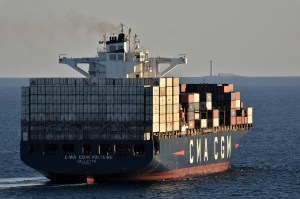
Maersk and Ocean Network Express (ONE) are implementing peak season surcharges of $2,000 per 40-foot container traveling from Asia to the U.S. and Canada in June, following CMA CGM’s move to levy the same total starting May 1. Mediterranean Shipping Company (MSC) is tacking on its own emergency fuel surcharges on the route, collecting $426 per 40-foot container to the West Coast and $540 per 40-container to the East Coast.
Dvorak noted that customers have been keener on paying for premium services like guaranteed space or expedited transit to move ocean freight even amid the rate hikes and surcharges, particularly if they have urgent shipping needs.
“More shippers want to ensure they get access to the right equipment and ensure they get space on board,” Dvorak said. “With the trials and tribulations over the last few years, people are getting a little bit more resilient and more willing to make a decision to secure the space and ensure that the supply chain continues.”
While the state of the Hormuz strait remains in flux, Dvorak doesn’t expect the problem to be a long-term systemic issue for container shipping.
“For the trans-Pacific, I feel like this is going to be a short-term strong spike. All the other underlying foundational data suggests that the carriers are still bringing in more space and will outpace demand on kind of a macro level as we go into the end of this year and beginning of next year,” Dvorak said.