
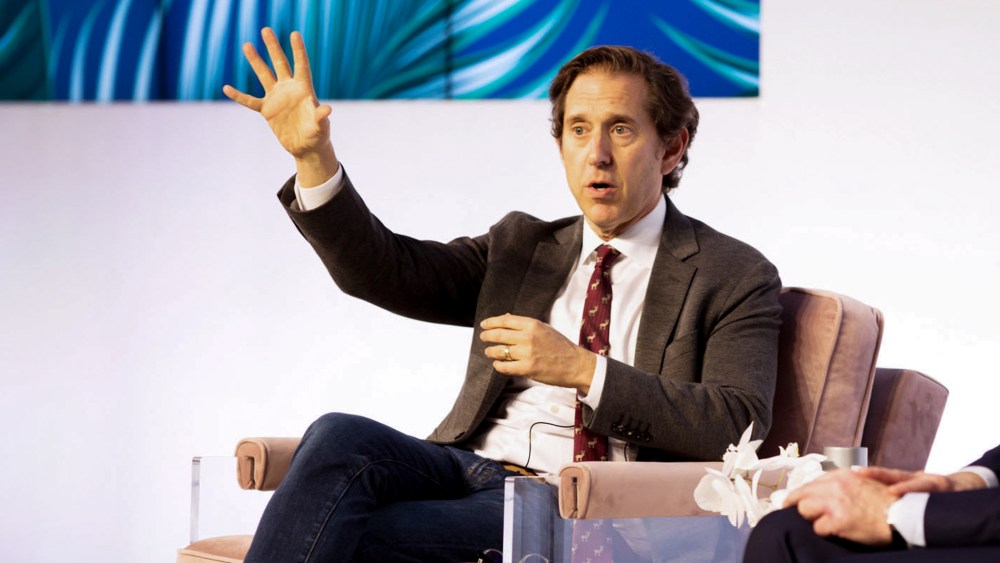
The Saks Global legal blame game is going to start in earnest soon — and former chief executive officer Richard Baker doesn’t want to play.
Baker, architect of the $2.7 billion deal to buy Neiman Marcus Group that proved to be either an imperfect lifeboat or the final straw for the beleaguered retailer, left the company as it filed for bankruptcy on Jan. 13.
Upon departure, he signed a separation agreement that, among other things, “expressly preserved Baker’s indemnification rights,” according to a filing with federal bankruptcy court in Houston.
Related Articles
The former CEO is now arguing the company wants to pull off a “bait and switch” that will strip him of those legal protections as it exits bankruptcy.
You May Also Like
To try to get the court to prevent that, Baker has filed an objection to the company’s Chapter 11 plan, which faces a confirmation hearing on Friday. The move is not unique. Other players have raised their own objections to the plan as they jostle to get the provision they care about to be included or excluded. It might be their last chance to impact the process as the retailer is expected to reemerge shortly after the plan is confirmed.
The exact percentages of who gets what out of the process remains to be seen. But brands that let past due bills pile up and shipped goods to Saks Global, crossing their fingers that the company wouldn’t go bankrupt, are unsecured creditors in the process and due to get almost nothing — except the chance to collectively sue people.
That’s because the creditor’s committee in the case negotiated a litigation trust that is being funded with $20 million and will go after any claims tied to the retailer. Any proceeds from that effort would go, in part, to vendors.
Already the committee has tried to force Baker to produce a long list of information covering 13 categories, including his communications with other executives and information “relating to the acquisition of Neiman Marcus.”
In April, Rachel Strickland, Baker’s attorney at Ropes & Gray, called it a “fishing expedition” and the two sides eventually reached an agreement after the former CEO “made certain productions of documents.”
Strickland did not respond to a WWD query on Baker’s objection to the plan.
The litigation trust retains the right to file suits on a long list of topics, from the “decision-making” around the Neiman’s deal and the treatment of intellectual property in a joint venture with Authentic Brands Group to executive loans and insider transactions.
“This will go on for years, although there may be interim distributions” to creditors, said Douglas Hand, a fashion-focused attorney at Hand Baldachin & Associates. “This is a common device we have seen in these large Chapter 11s, usually not resulting in a high percentage return for the unsecureds. The debtors have said the expected percentage recovery is “undetermined” — so they don’t and can’t really know.
“But the real problem I see is the size of the unsecured claims — estimated at between $1.5 billion to $1.8 billion,” Hand said. “They will need a lot of large recoveries to get much back to this class.”
Baker, who sat atop the corporate organizational chart and was a central player in years of key decisions at Saks Global, is expected to get a particularly close inspection under the legal microscope as the creditor’s committee looks for ways to drum up some funds.
But the former CEO sees the deal he cut on the way out as something of a shield.
Baker’s objection to the reorganization plan said he “respectfully submits that this court should not sanction such a ‘bait and switch,’ and deny confirmation until such provisions are removed from the proposed plan.”
Under his separation agreement, Baker had a variety of continuing obligations to Saks Global, “including provisions regarding non-solicitation and non-competition that would continue for a period of 24 months following the execution of the separation agreement. The separation agreement also included a non-disparagement provision that would continue for 12 months following the execution.
“This obligation was mutual, and the separation agreement included a prepared statement the global debtors would provide regarding Baker’s separation, stating: ‘We thank [Baker] for his visionary leadership over the course of his time with our company. We are grateful for his contribution and wish him the best for the future,’” the court filing said.
He also agreed to help with any investigations.
“In exchange, the global debtors explicitly agreed Baker would retain all indemnification rights,” the filing said. “In particular, the separation agreement provides that ‘By executing this [separation] agreement, you are not releasing any claims relating to…your right to indemnification in accordance with and subject to, the company group’s governance documents.”
But Baker’s filing points out that the proposed reorganization plan “purports to sever the indemnification rights of Baker as a former director and officer.”