The blue floor wasn’t a coincidence.
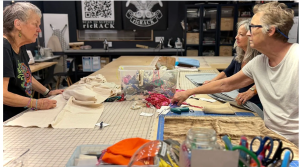
At Texworld New York City in the bowels of the cavernous Jacob K. Javitz Convention Center, the Next-Gen Innovation Hub was akin to an “oasis” for the premiere sourcing event’s overstimulated—and on an especially frigid January day, partially thawed—apparel and fabric buyers, said Thomasine Dolan Dow, the materials innovation guru who is by now an old hand at curating the diminutive but mighty space. (It’s her fourth.)
“Many people come here after going through the rest of the show and they can just exhale,” said Dow, who was of late the director of materials innovation and design at the now-defunct Material Innovation Initiative. “They’re taking notes, taking photographs, asking questions. It’s amazing.”
Related Stories
Most visitors end up spending at least 15 minutes caressing and fondle fabric samples—all of which are touted as high-performance, environmentally low-impact and cruelty-free alternatives to animal- or petrochemical-based incumbents. One reporter observed that it was like a petting zoo for next-gen materials and that Texworld should explore cladding bunny and chickie forms in the textiles next.
There were some familiar names, like faux leather purveyors Modern Meadow, TômTex and Rheom (formerly Bucha Bio), and some that were enjoying the warmth of the spotlight for the first time, such as St3ms, a Portland, Ore.-based firm that makes a suite of durable textiles using discarded banana waste.
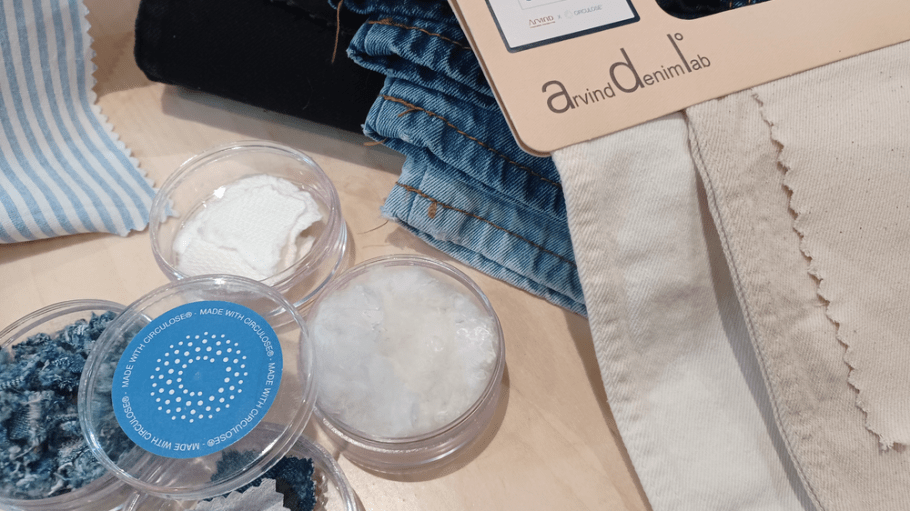
Several solutions, such as textiles-derived dissolving pulp Circulose and lignin-produced leather alternative Lignify, are commercially available, while others, like Zylotex, a regenerated cellulosic fiber made from Canadian hemp, and Hurd Co.’s Agrilose, an agriwaste-made precursor to viscose and lyocell, are in the R&D or pilot stage.

All were there, however, to “plant the seeds,” said Dow, who asked the exhibitors to deck their displays with the inputs from which their materials originated: cattail plants, bamboo stems, a bunch of—fake, for obvious reasons—bananas because “that’s how you make the connection that this is a plant-based or bio-based.”
Another thing the different firms have in common is they’re all scalable. The idea is that putting the innovations out there—literally—will lead to more awareness, more brand connections and, hopefully, more investment at a time when betting on something new is seen as a risky move.
Letting potential customers get up close and personal with materials is important, Jen Hodo, who leads U.S. business development at the viscose manufacturer Birla Cellulose, said at a Textile Talk on a stage down the hall, past a dizzying array of booths packed to the gills with garment samples and swatches.
“It’s all about brand engagement,” she said. “We have a studio in town with thousands of fabrics. All of them are innovative, next-gen materials that are indiscernible from the regular thing. [Part of] making them accessible to brands is giving them something tactile, like a hands-on experience, so they can see and feel and touch and just see all the applications and the possibilities of switching over.”
For Dow, choosing whom to showcase is part art, part science, but all instinct. “I cast a pretty wide net at first, but then I lean into people that I haven’t seen their materials in a while, or I know they’re doing something interesting that I think might be meaningful,” she said. “Especially when I know that people are doing things that replace polyester, whether that’s polyester fiber or polyfill; I know that that’s where fashion’s head is right now.”
There were, for instance, the two fluffs: BioPuff, a next-gen wadding that Bristol’s Ponda makes using bulrushes—cattails in North American parlance—that can help regenerate damaged wetlands, and BioSherpa, a fuzzy textile that New York’s own Biofur creates using 100 percent bio-based polymers from non-GMO feedstocks like corn, albeit the kind that isn’t used for food.
A buyer from a prominent toymaker that rhymes with “shazzgro” expressed interest in Biofur—not to be confused with Savian by BioFluff, a plant-based faux fur that is also being courted for children’s goods—for a potential line of plush animals. Ponda spoke with a person from upstate New York who can confer acreage for growing cattails that can rewet the land, draw down carbon and offer an alternative to conventional polyfill.
“I’m always amazed how little people know,” Dow said. “People have no idea this is happening, and that’s always surprising because, you know, I’m so engaged and I think everybody must know about this.”
Still, Dow doesn’t expect buyers to start ordering sample yardage at this point. Again, she said, it’s about those seeds. And when they go back to their brands and someone at a sustainability meeting happens to ask if anyone’s doing something new or novel, somebody can say, “Oh, you know what? I was at this show.”
“It has happened where I showed an innovator at the summer show in July, and then six months later, one of the brands contacted that innovator because they had seen them and got to touch it and hold it,” she said. “And they’re developing some samples now. That kind of thing happens. You don’t know who’s going to show up.”