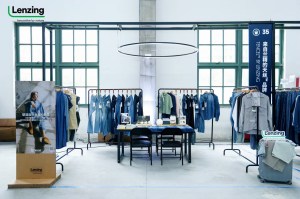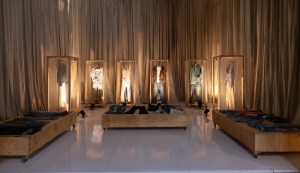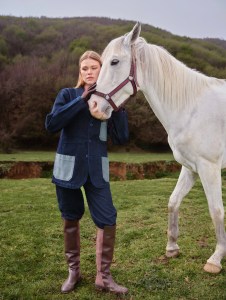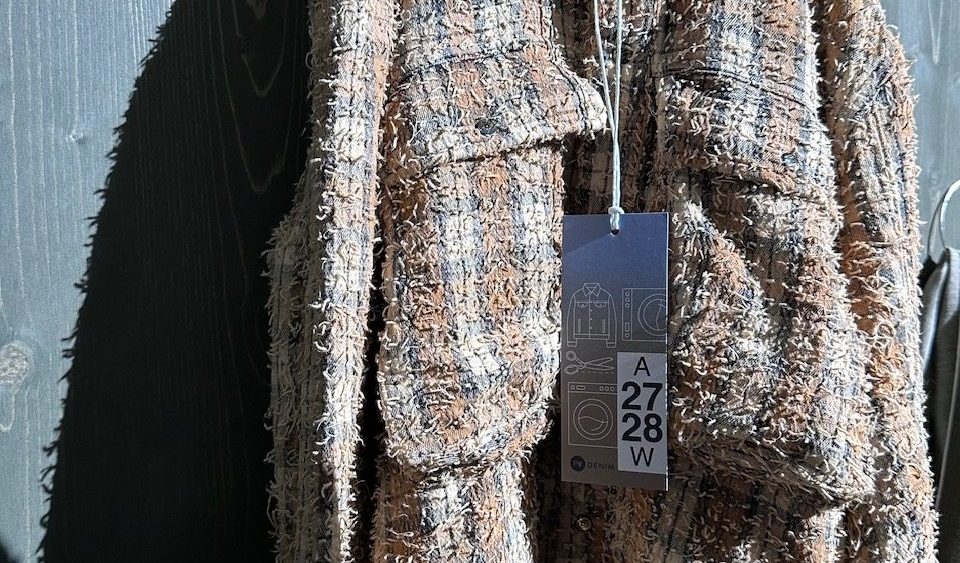
As 2026 unfolds against the backdrop of geopolitical shifts, rising democratic distrust, mounting climate pressures and AI disruption, Julieta Mercerat from the Première Vision fashion team said the fashion industry is absorbing the energy and releasing it through trends that are reshaping the way brands work and what they produce. For Fall/Winter 2027-2028, this means denim fabrics and garments that reflect a world between “living intelligence and AI acceleration.”
Last week at Denim Première Vision, Mercerat presented how these factors are influencing three denim themes alongside examples of garments and fabrics from the show’s exhibitors.
Related Stories
In an era that is shaped by speed, automation and digital perfection, she said the “value of human sensitivity” is becoming greater and denim with a “human trace” is becoming more important. “We are marking a return to living matter, to craftsmanship, to techniques that shape through time and experience,” she said. “We’re looking for less uniformity, so we’re moving away of quiet luxury and very simple basics, and we’re going [toward] more lived-in surfaces and more expressive garments.”
In Historical Archives, denim is affected by consumers’ desire for richer and more expressive materials. Silhouettes are more theatrical, elegant and fluid with controlled volume. Fashion is more emotional than functional. It also takes an unexpected turn into streetwear. “It’s a layered reinterpretation of different historical references in quite a chronical way,” Mercerat said.
Finishes play a key role in enhancing fabrics with density. Patinas, coatings (think oil painting effects) and flocking add richness and warmth, while fluffy yarns create a brushed effect. Laser prints reference Italian frescos and Renaissance masterpieces. Other jeans are hand painted, embroidered and accessorized with trims that take inspiration from decorative arts. New techniques mimic the look of pleated denim.
Key colors include dark neutrals like mineral gray and cacao brown, deep shades of purple and burgundy and dirty blues.
In Cultural Denim, Mercerat said designers use denim as a cultural global language.
“We’re moving beyond Western references and we’re opening to more cultural influences from new kind of regions,” she said, adding how designers from Africa, India, Latin America, the Middle East and South Korea are reinterpreting denim and working with local resources.
That focus on locality becomes evident in artisanal details, pigment choices and natural fibers such as regenerative cotton grown through programs supported by denim mills.
In Elevated Core, hybrid materials, comfort and functionality take priority but with a “slightly twisted” take on constructions and proportions. Mercerat said performance becomes “softer and more natural,” underscoring the demand for authenticity and a “more humanized vision of technology.”
The integration of cashmere, silk and Tencel Lyocell – HV100 elevate the hand feel of fabrics, while bonded denim, digitally printed denim and bio-based trims balance novelty with authenticity.
Mercerat said the theme moves away from vibrant saturated indigo shades. Instead, the color palette is colder with grayish undertones and dark, refined shades.
Market data
Denim Première Vision teamed with AI-powered trend forecasting firm Heuritech to dissect the women’s and men’s denim markets.
Straight jeans represent approximately 30 percent of the total share of the women’s market, followed by wide-leg jeans with 24.2 percent. “This is confirming this importance in versatile and timeless fits,” Mercerat said.
Skinny has 14.5 percent, fit and flare has 10.2 percent and slim has 9.8 percent. However, Mercerat noted that skinny and slim jeans’ growth is slowing in comparison to other fits that are growing like baggy and boyfriend.
A similar dynamic is happening in the men’s market, but with a few key differences. Straight jeans remain dominant, representing more than 32 percent of the market. Wide leg has 26.1 percent, followed by skinny, fit and flare, slim and tapered. Men’s tapered and fit and flare jeans show the most growth.
Basic denim washes (i.e. classic stone washed blue) are seeing huge growth. The category accounts for 53 percent of market share, followed by bleach (32 percent) and light (7 percent). Brut denim—a term Heuritech uses to describe raw denim—accounts for 8.2 percent of the market.
Regarding non-indigo colors, Mercerat said gray denim has 6 percent, white has 4.7 percent and dark denim has 4.6 percent.
Data on rises show that low-waisted jeans have the largest market share at 63.2 percent. Mercerat noted that the trend is more modern and wearable compared to the waistline’s Y2K heyday. “Normal waist jeans” have 23.9 percent market share and high has 12.9 percent.
Full-length jeans account for more than half of the market. Floor-length jeans have 29.6 percent and ankle-length jeans have 19.8 percent.