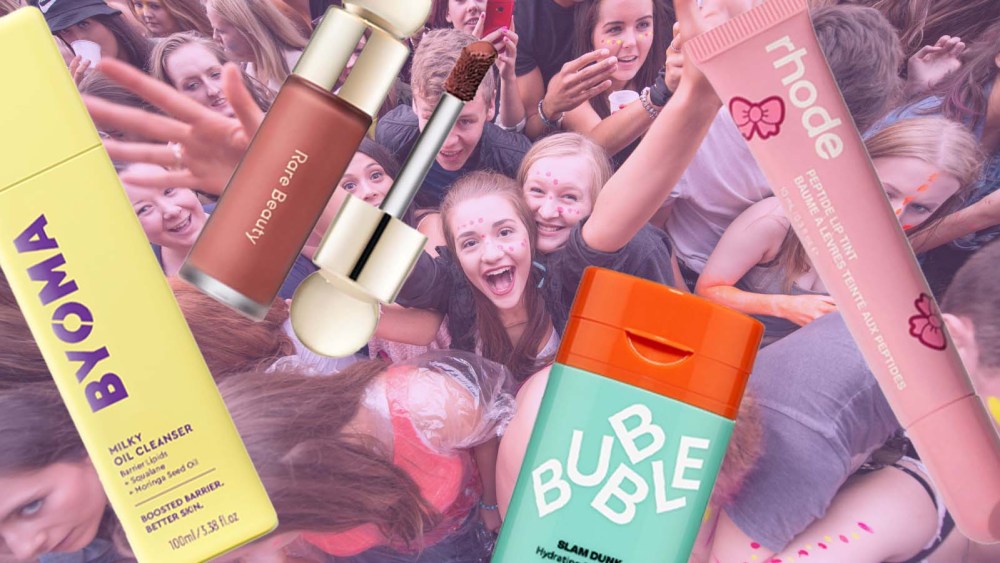
Where are the “Sephora tweens” now?
More than two years after that term catapulted through the cultural lexicon as Gen Alpha’s first tweens entered the beauty industry — often in droves, with a particular penchant for prestige products and in some cases triggering concerns that they were purchasing stock-keeping units too harsh for their youthful skin, the hype has moderated.
More meaningful habits, though, have emerged from the frenzy.
Related Articles
Case in point: NIQ data shows that while facial skin care sales grew 26.7 percent among households with kids ages 13 to 17 in 2023 — the year the “Sephora tween” was coined — that growth has most recently leveled off to about 8.9 percent during the 12 months ending in April.
Growth in fragrance has similarly been about 9 percent, while cosmetics/nails have grown slightly faster at 9.8 percent among these households.
“This cooling reflects a normalization following the initial surge, rather than a retreat,” said Anna Mayo, vice president of NIQ’s beauty vertical.
Indeed, one of the biggest differences between then and now is that teen girls today aren’t so much impulse buying neon-colored Drunk Elephant products as they are developing the kinds of thoughtful, nuanced routines that generations prior didn’t embark on until further into adolescence or early adulthood. Part of what’s driving this change, according to experts, is the rise of LLMs like ChatGPT and Claude in addition to social media platforms like TikTok.
“Teen girls in beauty are much more pragmatic than the stereotype would suggest,” said Jeff Lindquist, managing director and partner at Boston Consulting Group. “[They’re] able to very quickly become kind of quasi skin care, hair care and makeup experts. The original Sephora tween narrative was focused on excess and trend chasing, but the reality we’re seeing with this generation is that they just normalize beauty routines earlier in their lives.”
As for what they’re buying, a measurement by Nectar Social of 3.2 million posts across Instagram, TikTok and Reddit during the last three months determined that Hailey Bieber’s Rhode is the number-one brand by affinity among 13- to 17-year-old girls.
The brand scores a 97 out of 100 in Nectar’s Teen Resonance Index, driven by its prominence in Sephora-haul content, as well as its Spotwear pimple-patch launch in collaboration with Justin Bieber, which was timed to the pop star’s viral Coachella performances in April (coined on social as “Bieberchella”).

Drunk Elephant — which became accidentally synonymous with the Sephora tween movement in 2023, and earlier this year rebranded as it sought to reconnect with its core adult customer base — didn’t rank among the top brands in Nectar’s Teen Resonance Index at all.
Rather, other brands winning the cohort included Selena Gomez’s Rare Beauty, whose Soft Pinch liquid blush is a beauty haul mainstay; Byoma, which ranked number-six though it has the highest brand engagement rate in the dataset, and Tower 28, whose hypochlorous acid SOS Rescue Spray has reached “desert-island product” status among the cohort, according to Nectar.
While the teen beauty boom has led to a number of teen beauty founders entering the arena — such as 16-year-old Salish Matter, who launched Sincerely, Yours at Sephora; 14-year-old Coco Granderson, who founded Yes Day, and 14-year-old Harper Beckham’s rumored skin care line — these teen-specific brands aren’t necessarily the ones dominating their cohort.
From a channel point of view, while teens are still engaged with prestige beauty, their purchases more often tend toward the mass market today, especially in skin care. E.l.f. Beauty and Bubble are among other steady favorites of the generation, according to Nectar, while brands like Hero Cosmetics and ColourPop are rising.
Data from NIQ meanwhile shows that households with teens spend more than their fair share at mass stores, dollar stores and, increasingly, on TikTok Shop — where this group’s purchases have grown 340 percent during the last year. From a product point of view, lip liners and clarifying hair treatments are key areas of growth with the cohort.
Still, while e-commerce sales are growing in beauty, teens highly prioritize in-store shopping, with BCG finding that 80 percent of teens like shopping in-store, and 95 percent see shopping as a social activity with family or friends.
And while the last few years were dominated by discourse on Gen Alpha’s discovery of beauty, the coming years will be — formatively so — about the generation’s participation in beauty.
“Beauty discovery for teens has shifted from being aspiration-led to participation-led,” said Lindquist. “This generation is not just consuming beauty culture, they’re really shaping it and demanding things that prior generations of teens just weren’t doing. And that participation only amplifies as they age.”
The 10 favorite beauty brands of 13-17 year old girls on social media.
*Source: Nectar Social Teen Resonance Index, measuring teen-girl mindshare across TikTok, Instagram and Reddit in Feb.-May.
1. Rhode: 97
2. Rare Beauty: 94
3. Sol de Janeiro: 92
4. Starface: 91
5. E.l.f. Beauty: 89
6. Byoma: 87
7. Bubble: 84
8. Touchland: 82
9. Tower 28: 80
10. Beauty of Joseon: 79