America’s affordability crisis is having ripple effects throughout the country, as people struggle with the rising costs of food, housing, health care and fuel. For the shoe industry’s nonprofit organization, Two Ten Footwear Foundation, the increased need has been clear.
Shawn Osborne, president and chief executive officer of Two Ten, noted that over the past year the organization has provided almost $1.3 million in emergency financial assistance to roughly 1,200 footwear families. “Over half of those are for medical and housing, just people struggling with medical bills and things that are happening unexpectedly,” Osborne said.
Related Stories
That’s a contrast to previous years, when Two Ten’s efforts were centered around disaster relief. “This year, we had Winter Storm Fern and the Kona Low [storms] in Hawaii, but those were smaller disasters,” said Osborne. “Most of our resources recently have gone toward dealing with the affordability and cost of living challenges that our footwear families are encountering.”
You May Also Like
And for 86 years, Two Ten has always been ready to help. “Whatever the situation that occurs in people’s lives, what’s nice is that they can turn to Two Ten and we take them from that sense of instability to stability,” added Osborne.

In addition to hardship and disaster relief, Two Ten also provides scholarships for higher education and upskilling grants, both of which are becoming increasingly vital in today’s rapidly changing professional landscape. In fact, the group received 158 applications from shoe employees for scholarships this year, up from 89 the previous year.
“You see it every day on the news, with AI and the skills gap,” said Osborne. “The role we play in providing financial assistance around education and training to succeed is more important than ever.”
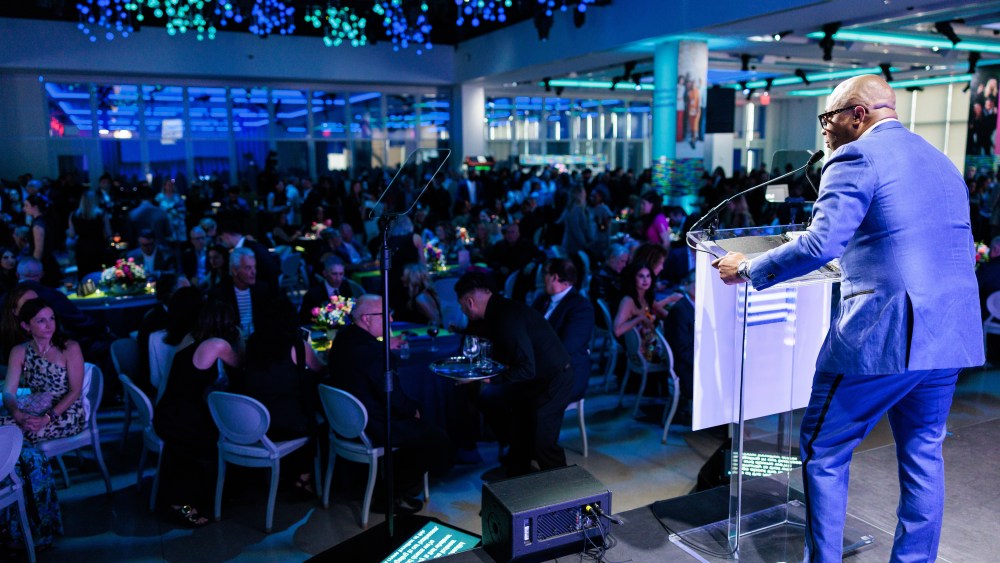
On June 2, the nonprofit will bring the industry together for its annual gala to support that charitable mission. The event will be held for the third time at The Glasshouse in New York. An estimated 650 guests from across the industry are expected to attend the gala, which serves as a celebration of the group’s community building mission and a fundraiser to refill its coffers for the coming fiscal year.
Osborne said that corporate donations thankfully rebounded this year after the tariff uncertainty of 2025, and the group has already hit its fundraising goal of $500,000, with more expected as the event approaches. Major supporters include Micro-Pak Ltd., Bordan Shoe Co., Power Rich, Zilsen International Co., Alliant Insurance Services Inc. and Bay Rag Corp.
At the gala, the nonprofit will honor two footwear executives who have made immeasurable contributions to Two Ten and the industry at large.
Mark Lardie, retired president and CEO of Rack Room Shoes, will be presented with the A.A. Bloom Memorial Award, named for one of Two Ten’s original founders. That award recognizes extraordinary service by an individual whose work has significantly advanced the Two Ten mission.
And longtime Nordstrom leader Tacey Powers will receive the 2026 WIFI Impact Award. The executive vice president and general merchandise manager of shoes, accessories, home and kids is being celebrated for her leadership and dedication to advancing women in the footwear community.
As Two Ten seeks to further bolster its roster of programs, the group is focused on two new initiatives this year.
The first is to revive and invest in industry-wide mentorship under its education umbrella. Two Ten’s WIFI (Women in the Footwear Industry) group has already developed a successful model for female executives, but Osborne said there is a need for a strong mentorship program for the entire footwear community.
And he’s already actively recruiting participants. “We’ve had several former and current executives who have said they’d step up and really support that program,” said the nonprofit CEO.
Meanwhile, Two Ten is also putting a gift from Martin Berman at Micro-Pak to work by initiating its first research project on July 1 to study the effects of the personal hardship grants. “Once we can look at the financial and emotional impact that we have, we can use this data to really refine our programs going forward,” said Osborne.