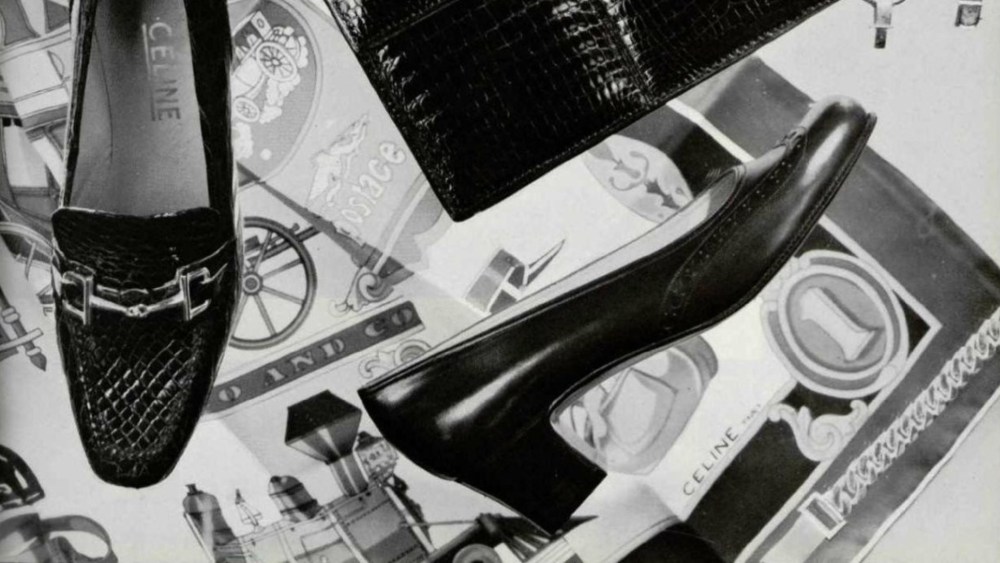
Making his debut as artistic director of Celine back in July 2025, Michael Rider made scarves a key element, dispatching squares of ivory silk artfully knotted around the show invitations, and installing a giant, rippling foulard over the courtyard of Celine headquarters for the partly open-air display.
Speaking to reporters after that show, the American designer described scarves as a “symbol” and “something that’s very personal.”
“Scarves are something I wear, and everyone wears differently,” he said at the time. “It’s also something you tend to keep and something maybe you give to your children, or to a friend. But I like the idea, particularly at Celine, where scarves mattered so much at the very beginning.”
You May Also Like
Related Articles
They’re mattering a lot more again, thanks to Rider’s efforts.
At WWD’s request, Launchmetrics retrieved data showing rapid and steady growth in online conversations around Celine scarves.

In the quarter before Rider’s first show, the media impact value of such discussion amounted to $221,000.
By the third quarter of the year, after the show, the MIV jumped more than threefold to $980,000, progressing to $1.2 million by the fourth quarter of 2025 and to $1.8 million by the first quarter of 2026.
The top post to date, valued at $72,000, came courtesy of Elle Taiwan during Paris Fashion Week last February: It pictured South Korean signer Kim Tae-hyung, known professionally as V, draped in his silk scarf invitation, the Celine logo writ large over a sketch of the Arc de Triomphe.
Rider has also made silk scarf prints a key element of his ready-to-wear collections, using them for pants, skirts, draped tops, men’s polo shirts and trenchcoat linings in his sophomore runway show.
He’s added a vertical wall display for scarves at select Celine boutiques to bring visibility to the category, which has had a positive impact on the business, according to the house.
Céline Vipiana, who founded her luxury fashion house in Paris in 1945, introduced silk scarves in 1963 and made them the stars of an advertising campaign three years later, including one inspired by American postal imagery.
Vipiana expanded her business into the U.S. in 1968, and it now ranks as a key market.
According to Celine, fully integrated into LVMH Moët Hennessy Louis Vuitton in 1996, it should end 2026 with a total of 36 stores in the U.S., including new locations in Scottsdale, Ariz., and two in Florida. The U.S. market has been “particularly supportive” of its new direction under Rider, according to the company.