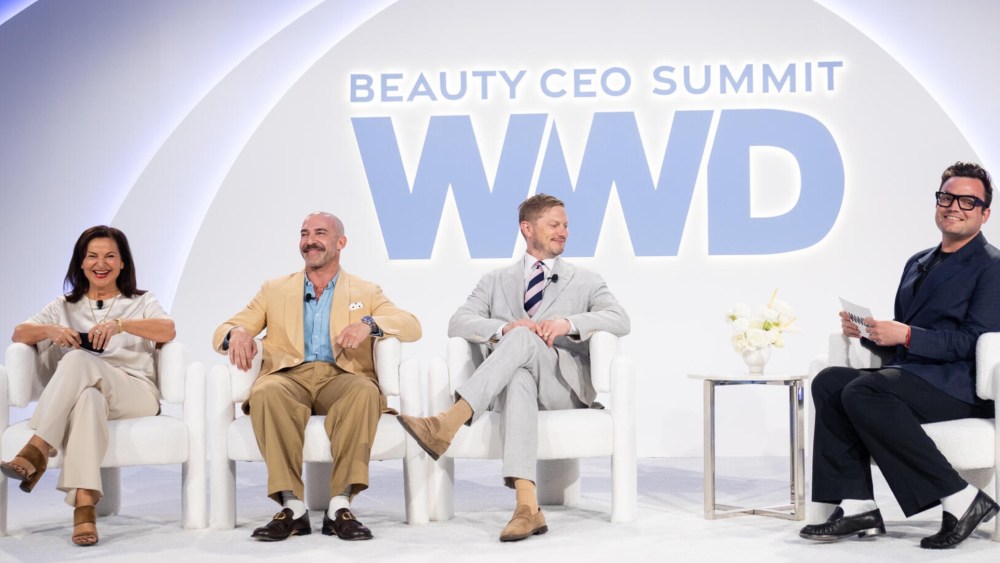
“Perfume is an art form that’s equal in its potential for what it can convey to painting, literature, poetry and music,” said David Seth Moltz, cofounder of D.S. and Durga.
This sentiment was shared at the 2026 Beauty CEO Summit, in conversation with Veronique Gabai-Pinsky, founder of her eponymous fragrance brand, Carlos Huber of Arquiste Parfumeur and moderator James Manso, beauty and fashion market editor at WWD.
“One of the ways that we have to shift the narrative that will make this a big phenomenon for the masses that we will all in this room profit from is to rethink the idea of ingredients,” Moltz continued.
Related Articles

For Gabai-Pinsky, ingredients are a small part of a much bigger system at play. “I look at ingredients through the filter of wellness, because the next frontier for the fragrance category is not just the effective beauty, but the healing power of scent and wellness,” she said.
Where Gabai-Pinsky’s turning her attention is the “pain points” of the business. “Those are things that can become a risk, and you need to fix them right away. I’m looking at things that are emotionally sticking. What are you becoming known for? Is it true to your brand? If it is, then you have to push, because this is why people are going to love you, trust you and come back to you,” she continued.
On how the table stakes have evolved in niche fragrance, Huber said consumer curiosity has peaked. “Nobody could have predicted that we were going to be all locked at home [in 2020], and we were going to experience and look for fragrance as a way to give us soothing and peace and a sense of beauty at home. This whole idea of discovery and multiplicity in fragrance is very exciting right now.”
Gen Z and Gen Alpha consumers are shopping for more than just gourmand, Huber said. They’re showing interest in scents their grandparents and great grandparents once wore, namely orange blossom and orris.
“The other thing that I’m interested in are the new olfactive profiles that we haven’t explored, but we as a global culture are consuming,” Huber said. “Savory gourmands, soy sauce, mushrooms, olive oil, all these things that now have an effective signature in our heads — how can we adapt them to perfume and fragrance development.”
That said, too much innovation, too fast isn’t the way to retain customers. “Especially as you’re building a universe and building a loyalty with who your people are,” Huber said.
The same can be said of scaling the business. Moltz suggests selecting seller channels based on “where the love is.” He said: “I think in order to scale, you really do need the right partner, but you need the partner who cares.”
“Cultivate your garden, and make it so beautiful that people will want to come in one by one, relationship by relationship, perfume per perfume, skin by skin,” Gabai-Pinsky added.