Born a pirouette away from Paris’ Palais Garnier opera house in 1906, Van Cleef & Arpels’ attraction for dance came as no surprise.
“The family would go on a regular basis to see ballets and operas at Garnier,” said Alexandrine Maviel-Sonet, patrimony and exhibitions director for the Compagnie Financière Richemont-owned jeweler.

But it’s in New York that this early proximity evolved into a lasting pas-de-deux that continues to this day in jewels, but also through a number of programs such as the “Dance Reflections by Van Cleef & Arpels” initiative.
Related Articles
Feminine figures caught mid-step in arabesques, leaps and entrechats made their entrance in the house design vocabularly in the early 1940s, just as Van Cleef & Arpels was stepping onto the American stage with an office at Rockefeller Center in 1939 and a Fifth Avenue boutique the following year.
You May Also Like
American collectors embraced the Dancer clips, but it was the meeting between Claude Arpels, the second-generation scion who led the house in U.S., and New York City Ballet cofounder George Balanchine that left their worlds entwined for good.
Arpels “was the one who would go very often when he was a child with his uncle [Louis Arpels] to the opera,” a taste that he kept in adulthood, Maviel-Sonet said.
Meanwhile, the choreographer was “on his daily route past Van Cleef & Arpels on Fifth Avenue and became fascinated with the extraordinary beauty of the collections” in the early 1960s, WWD was told in 2007 by the jeweler’s then-chief executive officer and president Stanislas de Quercize.
Their shared passion for gemstones and movement would later crystallize in “Jewels,” Balanchine’s 1967 non-narrative ballet in three acts named after precious stones and set to the music of composers Gabriel Fauré, Igor Stravinsky and Pyotr Ilyich Tchaikovsky.
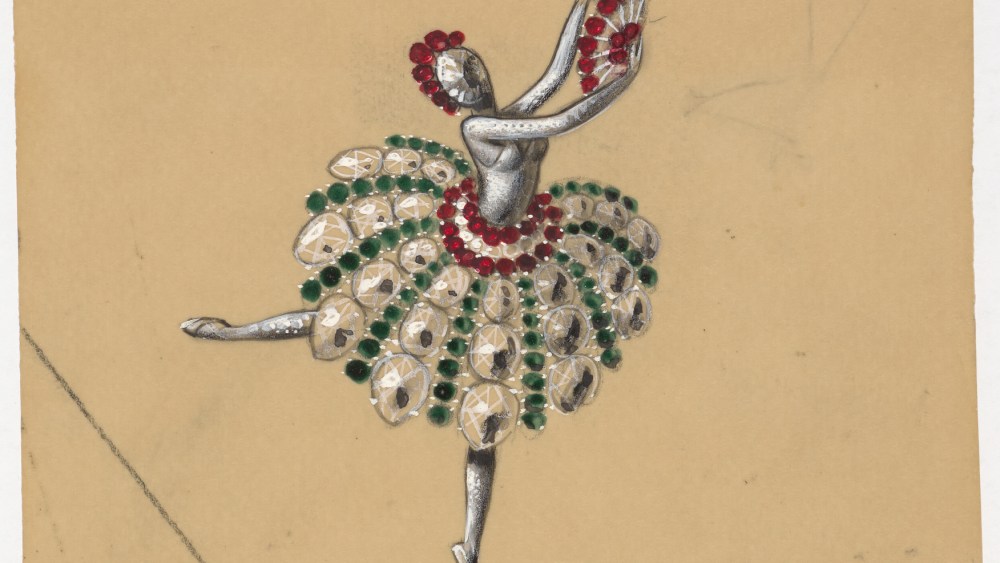
For Van Cleef & Arpels, this proximity to the stage translated into the design of its jewels, from clips to necklaces and even powder cases. Maviel-Sonet pointed out how interpretations evolved over time, with “large diamonds, emeralds, rubies” lighting up the tutus of 1940s ballerinas.
In the 1950s and 1960s, goldwork comes to the fore, with skirts rendered in intricate, lace-like precious metal. A decade later, the silhouette shifts from the graceful, slender dancers to more muscular, powerful figures, mirroring changing physiques onstage.
They took pride of place in “Ballet Précieux,” the 2007 high jewelry collection that paid homage to Van Cleef & Arpels’ collaboration with Balanchine with its jewels named after famous ballets or shaped after tutus — plus Ballerina clips, of course.
Enriching the house patrimony with such pieces is an uphill battle, owing to their popularity among collectors. “If you see a Ballerina, you have to take it,” Maviel-Sonet recalled being told. “They’re very difficult to find.”