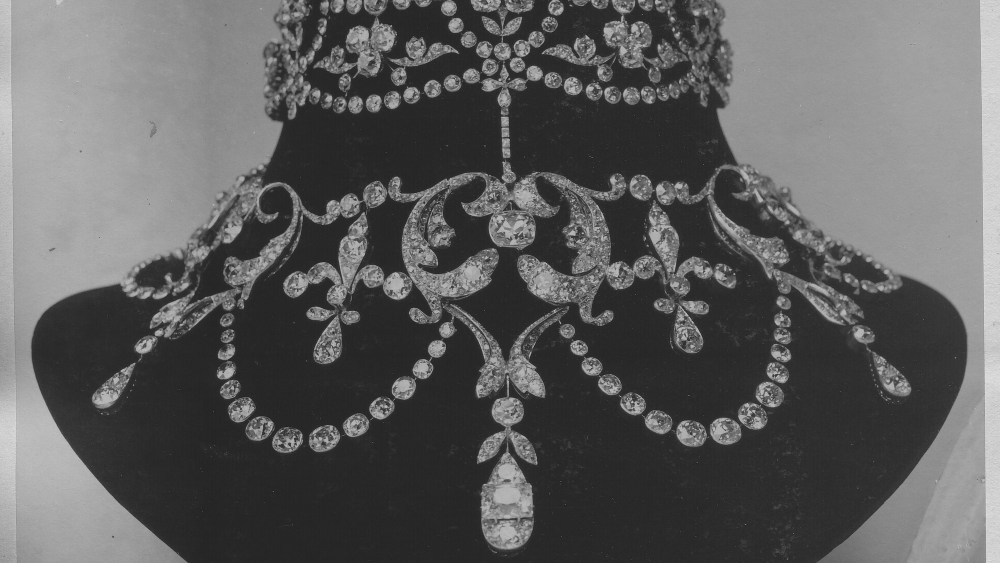
If the Maharajah of Patiala is a king whose fantastic orders shaped the destiny of Boucheron, then the American clients of the Place Vendôme cornerstone are undoubtedly its queens.
Brightest among them was Marie Louise Mackay, the grandest of Belle Époque society ladies in Paris whose second husband John Mackay’s billion-dollar wealth had sprung from the discovery of silver in the Nevada desert.
From the summer of 1876, when the couple moved to the City of Lights and settled in a hôtel particulier overlooking the Arc de Triomphe, “Madame Mackay” appeared no less than 102 times in the jeweler’s commission books for the following a quarter of a century.
Related Articles

Coincidentally, that was the year when Frédéric Boucheron began courting the New World’s wealthy clientele on the other side of the Atlantic Ocean, taking part in the Philadelphia World’s Fair — a move that would net him a grand prize and the Legion of Honor.
You May Also Like
Meanwhile back in Paris, Mackay was a regular visitor of 26 Place Vendôme. Earrings, necklaces, and even a tiara went into the treasure chest of this society lady, who had been born in Brooklyn in a modest Irish Catholic family.
Among her treasures was a dog-collar necklace with plastron set with 621 diamonds for a total of 237 carats, documented in the 1899 commission book.
Most of her pieces no longer exist. Some were transformed several times during Mackay’s lifetime, such as a piece featuring a 159-sapphire centerstone that had no less than two incarnations, starting as an original 1878 delicate festoon of florals that was reworked into two successive bow-inspired designs in 1889 and 1890.
Many were taken apart after being dispersed following her 1928 death.
One that survived was a ruby and diamond necklace that would eventually find its way into the hands of a wealthy compatriot — Mona Bismarck, as French writer and journalist Vincent Meylan revealed in “Boucheron: The Secret Archives.”
Boucheron chief executive officer Hélène Poulit-Duquesne said the jeweler’s transatlantic links ran through such individuals of taste, as she rediscovered ahead of the jeweler’s installation on New York’s Madison Avenue in 2024.
While some major clients’ taste left a mark on the jeweler’s creative vernacular, what Americans came for was to be on-trend. “They came to Boucheron to be current,” said Poulit-Duquesne. That meant returning to update and rework important sets, like Mackay had done.
Boucheron was the ideal house for this, having laid the groundwork for transformability from the very beginning. The first traces of jewels that can be worn multiple ways date back to August 1859, with the mention of a bracelet that can be turned into a brooch mentioned in the very first order book.
Under Poulit-Duquesne’s decade-long tenure, she and creative director Claire Choisne have pushed its designs more into multiwear pieces, driven by a desire for the house’s jewels to accompany clients as often as possible.
And Americans still are among Boucheron’s most fervent collectors, snapping jewels up at auction — or new creations such as the “Eaux Vives” shoulder brooches, unveiled in July 2024.